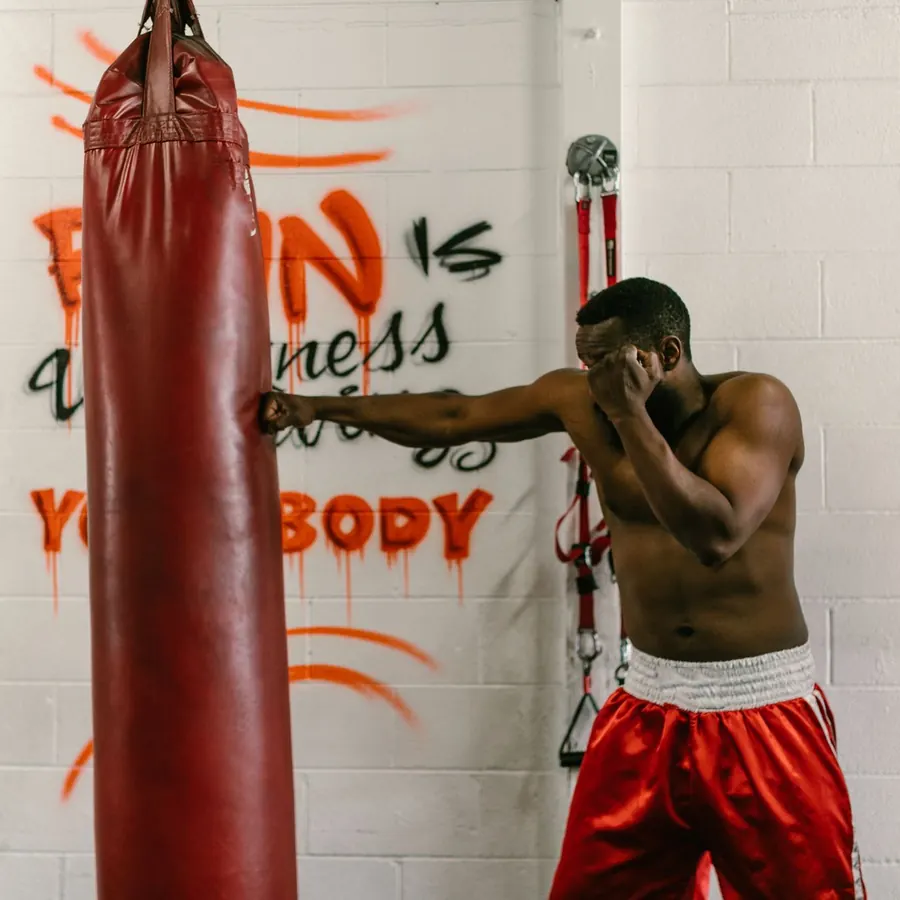
The bag
Heavy Bag Boxing Training
The heavy bag is a patient target. It will also let you practice a bad punch a hundred times. Training on it well means protection, a round you can describe, and someone who will stop you when the wrist folds.
Hands first
Wrap the wrists and the knuckles before you put gloves on. The wrap should be snug, not a tourniquet, and the wrist should feel supported when you make a fist. Gloves for bag work are often fourteen or sixteen ounces for most adults, but the right weight is the one that keeps the wrist straight. A pretty ten-ounce glove is a bad idea if the joint collapses. Do not hit a heavy bag with bare hands. Do not hit it in street shoes that throw your balance, and do not "test" a sore wrist to see if it warms up.
Stop if you feel a sharp pain in the hand, the wrist, or the shoulder. Soreness in the muscles after a new session is one thing. A joint that complains during the punch is a reason to end the round. This page is not medical advice. If the pain stays, a clinician is the right next person, not another round.
Common mistakes
Arm punching: the hand flies and the hip stays square, so the bag barely moves and the shoulder does all the work. Dropped hands: the shot lands and the guard stays down for the photo. Standing square: both feet point at the bag, so there is no rotation and no way to exit. Reaching: you lean your nose over your toes to touch a bag that is too far away. Hugging the bag: you stand so close that every punch is a push.
Set the distance so a finished jab touches with the arm long and the chin still back. The bag should be near the height of a partner's head and body, not so high that you uppercut the ceiling and not so low that you bend in half. If you can, have a coach watch ten punches before you chase a harder sound. The sound of the bag is a poor teacher.
A round you can repeat
A simple bag workout for skill, not for punishment: three to six rounds of two minutes, with a minute of rest. Round one is only the jab, and only punches that return. Round two is jab and cross. Round three adds footwork, two steps in and two steps out, so you are not planted. Later rounds can add a short hook if the elbow stays honest. Rest is part of the workout. Gasping through the rest means the next round will be sloppy, and sloppy on the bag is how hands get hurt.
Breathe out on the shot. Keep the non-punching hand up. Move your head a little between combinations so you do not become a statue. Finish the round on your feet with the hands home, not draped over the bag.
Conditioning versions of this work show up in boxing fitness classes. Technical versions belong with fundamentals. If you want every mistake named out loud, that is a private lesson question. Beginners should not start their first day with hard bag rounds. Read beginner classes and earn the bag with a stable wrist.
Supervision is a question, not a listing
Searches for a gym with a boxing bag are really two questions: where is the equipment, and who is watching. This site does not pin a building and does not claim that a supervised bag class is on the calendar today. Heavy-bag boxing training, as a method, is something you can ask about. An operator would have to confirm whether a session includes a coach, how many rounds, and what gear you must bring.
Use the inquiry steps and the contact form. From the classes hub you can also decide that you want fitness rounds or technical drills instead of a bag-centered hour. If bag work is the hour you want, say whether you are new, whether your wrists have bothered you, and whether you want skill rounds or conditioning rounds. Those are different sessions even though the bag looks the same.
Questions about bag training
Do I need wraps under the gloves?
Yes for bag rounds. Wraps steady the wrist and the small bones of the hand. Gloves spread the impact. One without the other is a poor plan once you hit with intent.
How hard should I hit the bag?
Hard enough to be honest, light enough that the wrist stays straight and the punch comes back to the guard. If the wrist bends or the shoulder complains, the round is too heavy for your current skill.
Is a gym with a bag the same as coached bag training?
No. A bag in a room is equipment. Supervised bag training means someone can stop a bad habit. This site does not publish a list of gyms and does not claim a staffed bag session is currently on a schedule. Ask.
Ask about bag training
Mention your experience and whether you want skill rounds or conditioning rounds.